Ask any experienced Bristol building surveyor which part of the inspection they spend most time on, and the answer is usually consistent: the roof space and external roof coverings. It's not that roofs are necessarily the most dramatic part of a property survey — it's that they're the part that can go most wrong, and the consequences of getting it wrong can be extremely costly.
In Bristol, where a very high proportion of the housing stock is Victorian or Edwardian, roof inspections are particularly important. Original cut timber roofs, traditional Welsh slate and clay tile coverings, and a hundred-plus years of subsequent alterations make Bristol's older roofs both fascinating and — from a surveying perspective — complex.
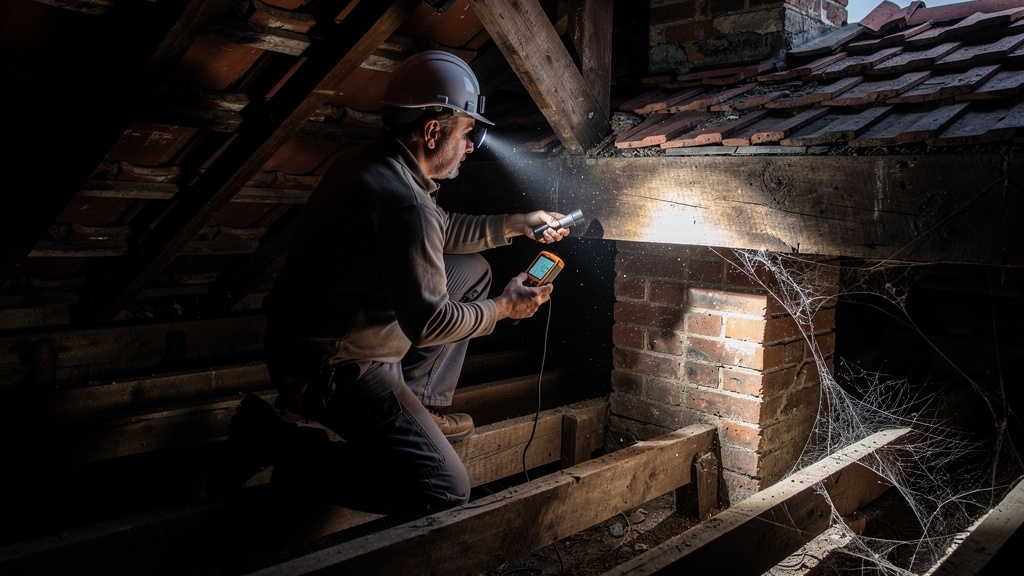
The Two Parts of the Roof Inspection
A roof inspection is really two separate inspections: the external roof coverings (which the surveyor inspects from ground level, using binoculars and any accessible vantage points) and the roof structure (inspected internally from the loft space where accessible).
Both are important. Both are included in both Level 2 and Level 3 RICS surveys — though the depth of investigation and commentary is significantly greater in the Level 3.
What We Look for Externally
From the exterior, your surveyor is looking at:
- Roof covering condition: Are the slates or tiles bedded properly? Are there any slipped, cracked, missing or broken tiles? Are any individual slate fixings failing?
- Ridge and hip tiles: These are typically bedded in mortar and this mortar has a limited lifespan. Failed ridge mortar is one of the most common defects we find in Bristol's older properties.
- Lead flashings: Lead is used at the junction between the roof covering and vertical elements like chimney stacks, parapet walls and dormers. Failed lead flashings are a very common cause of water ingress in Bristol's period properties.
- Gutters and downpipes: Cast iron gutters and downpipes were standard in Victorian properties. They're durable but, when they fail, the consequences for the building can be severe. Blocked or overflowing gutters are one of the most common causes of damp in Bristol terraces.
- Parapet walls: Many Bristol properties have low parapet walls at the front or rear. These are particularly vulnerable to water ingress, frost damage and structural deterioration.
What We Look for in the Loft Space
The loft inspection is where a really experienced surveyor earns their fee. A good loft inspection can reveal issues that would be completely invisible from ground level — and in Bristol's Victorian housing stock, the loft space frequently tells a very revealing story about the overall condition of the property.
Roof Structure and Timber Condition
Victorian cut timber roofs are made up of a series of rafters, purlins and ridge boards, all hand-cut and assembled on site. They're generally well-designed and well-built. But after 130-plus years, issues can develop:
- Wet rot in rafters where the roof covering has leaked or failed
- Woodworm in roof timbers — extremely common in Bristol's older housing stock
- Failed or inadequate strutting and bracing, sometimes the result of a loft conversion that removed structural members without replacement
- Alterations to the roof structure — removed purlins, weakened rafters from cables or pipework — that affect its structural integrity
Sarking Felt
Modern roofs have sarking felt (a breathable membrane) laid between the tiles and the roof structure, providing a secondary line of defence against wind and water. Many Victorian and Edwardian roofs in Bristol have no sarking felt at all — the slates or tiles sit directly on the battens with no secondary protection. This isn't necessarily a problem in itself, but it does mean that any failure in the roof covering can lead to water ingress much more quickly.
Evidence of Past Leaks
Water staining, discolouration and staining on roof timbers or insulation is one of the most useful diagnostic tools in the loft space. Even if the leak has been repaired, the evidence of a past leak tells us where the roof covering has been vulnerable — and invites closer inspection of that area.
Insulation
Loft insulation has been required or incentivised in England and Wales for several decades, and most Bristol properties now have some form of loft insulation. But is it adequate? Is it correctly installed? Has it been disturbed by previous access or work? These are all things your surveyor will note.
Water Tanks and Pipework
Many older Bristol properties still have cold water storage tanks in the loft — typically large plastic or galvanised steel tanks that store cold water for the hot water cylinder. These tanks have a finite life and your surveyor will note their apparent condition, along with any visible pipework insulation.
Common Roof Issues Found in Bristol Surveying Work
Over years of surveying Bristol properties, some roof issues come up time and again:
- Failed valley gutters: The internal gutters in valleys (where two roof slopes meet) are often lined in lead or zinc, and this lining has a finite life. Failed valley gutters are a very common source of water ingress.
- Chimney stack deterioration: Bristol's Victorian chimney stacks are a joy to look at from street level but a frequent challenge for surveyors. Failed flashings, cracked or spalled brickwork, and defective chimney pots are all very common.
- Flat roof sections: Many Bristol terraces have had extensions built with flat roofs. Flat roofs have a significantly shorter lifespan than pitched roofs and are one of the most frequently flagged issues in Bristol building surveys.
Should You Be Worried?
Reading this, you might be starting to wonder whether any Victorian roof in Bristol could possibly be sound. The answer, of course, is yes — plenty are. The key is proportionality and expertise. A good surveyor can distinguish between minor, cosmetic issues that require only routine maintenance, and defects that represent a genuine risk to the building's weather-tightness or structural integrity.
That's why we recommend a Level 3 Building Survey for older Bristol properties. The deeper investigation that a Level 3 allows gives you — and your surveyor — the ability to reach accurate, well-evidenced conclusions about the condition of the roof.